For marketers, Gen Z has become a primary target audience, yet their habits and preferences remain a moving target, often misunderstood and rapidly evolving. They are digital natives, shaped by unprecedented connectivity and economic volatility, making last year’s playbook obsolete for this year’s holiday season.
This year, the disconnect between assumption and reality is wider than ever. As Gen Zers navigate major life transitions in a turbulent economy, their approach to shopping is filled with surprising contradictions. They are tightening their belts while simultaneously planning to engage with holiday shopping more intensely than any other generation. This isn’t just a simple trend; it’s a fundamental shift in consumer behavior.
To succeed in 2025, brands must look beyond the surface-level stereotypes and understand the complex motivations driving this generation. This article reveals five of the most impactful, data-backed insights about marketing to Gen Z that will force you to rethink your entire marketing strategy this holiday season.
The Gen Z Enigma
1. The Great Contraction: Why Gen Z Is Slashing Holiday Budgets
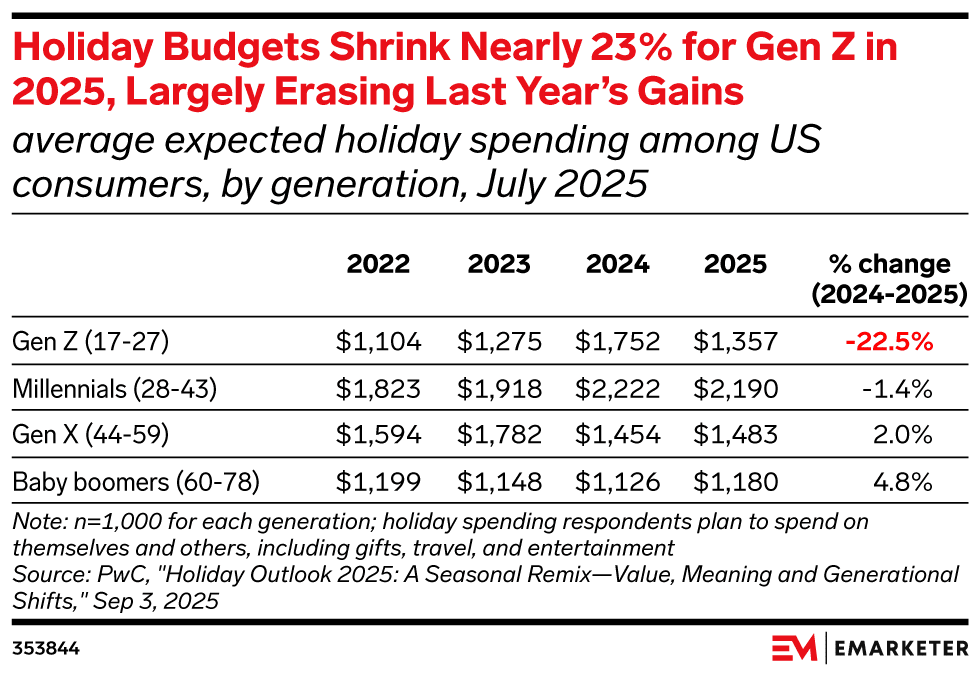
The first and most critical truth is a financial one: Gen Z is pulling back on spending significantly. After a year of robust budget growth, they are now poised to cut their holiday spending more than any other generation, signaling a major shift in their financial confidence and priorities.
This is a marked reversal from the previous year, when their holiday budgets surged by 37%. For 2025, they plan to cut their spending by 23% to an average of $1,357. The primary drivers for this pullback are twofold. First, many are facing early career and life transitions within an uncertain economy. Second, they are concerned about looming, tariff-related price increases, with 24% of young shoppers planning to buy gifts earlier specifically to avoid them.
Gen Zers expect to cut their holiday spending by 23%, more than any other generation.
2. TikTok Isn’t Just for Dancing—It’s the New Search Engine
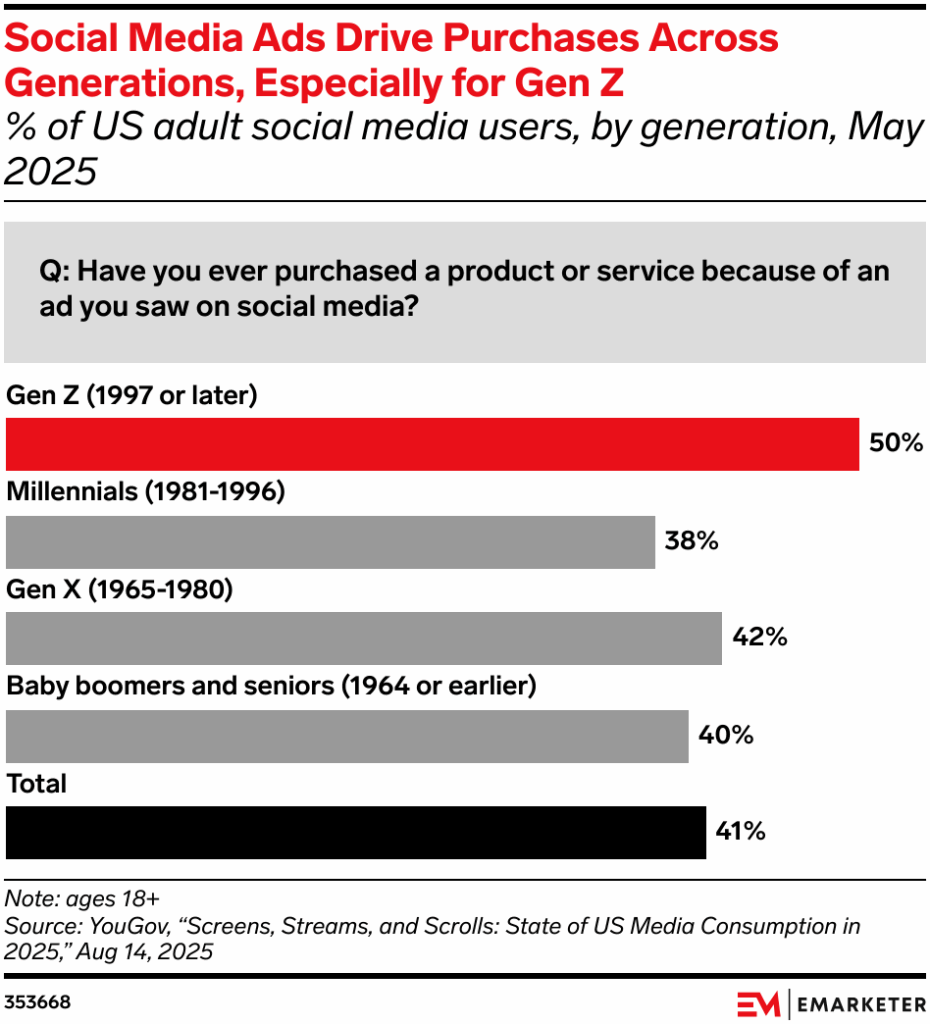
While many brands still view TikTok primarily as a platform for discovery and entertainment, Gen Z has transformed it into a powerful tool for research and search. They are turning to social media not just to see what’s new, but to actively find answers, compare products, and make informed purchasing decisions.
According to an EMARKETER report, a staggering 58.8% of Gen Z have used TikTok for search, a rate far higher than that of Millennials (38.8%) and other generations. This is reinforced by data from Basis Technologies, which found that around 70% of Gen Zers discover products on the platform, and nearly half consider it the most useful social channel for research. This means creating content that functions like a search result: product comparisons (‘Brand X vs. Brand Y’), honest reviews, ‘how-to’ guides for gift selection, and searchable ‘Top 5 Gifts for…’ lists that provide tangible value beyond entertainment.
3. Principles Over Points: Values Above Traditional Loyalty
There is a surprising disconnect in what motivates Gen Z shoppers, and it represents a major challenge to traditional marketing tactics. While they show a striking lack of interest in conventional loyalty programs, their commitment to values-driven purchasing has never been stronger.
A full 75% of Gen Zers state they would spend more on a gift from a brand that aligns with their personal values—significantly outpacing millennials (66%), Gen Xers (53%), and baby boomers (50%). For over a third (34%), factors like sustainability, health, and wellness are top considerations when buying gifts. In stark contrast, data from Klayvio shows that only 10% of Gen Zers consider loyalty programs important, compared to 21-22% of Gen X and Baby Boomers.
The takeaway is clear: marketing budgets should shift from point-based reward systems toward initiatives with tangible proof of corporate values, such as transparent supply chain content, partnerships with environmental nonprofits, or campaigns highlighting sustainable product materials.
4. The BFCM Paradox: Spending Less, But Shopping More Intensely
Despite slashing their overall budgets, Gen Z is not sitting out the holiday shopping season. In fact, they are leaning in more than anyone else. This apparent contradiction reveals a highly strategic and deal-focused mindset. They are planning to reconcile lower spending with high participation by becoming smarter, more tactical shoppers.
A McKinsey survey found that 92% of Gen Z are looking to take part in holiday shopping, the highest of any generation. Their strategy is clear: maximize value. To do this, 17% plan to start their shopping specifically during the Black Friday/Cyber Monday (BFCM) weekend to lock in the best deals. They also rely heavily on social proof to ensure they make the right choice, with 45% considering reviews an important factor in their purchase decisions. Gen Z isn’t opting out; they are executing a focused, intense, and highly informed strategy to maximize value during the season’s biggest sales.
5. Beyond the Inbox: Winning Gen Z with AI, SMS, and Social Commerce
To effectively connect with Gen Z, marketers must meet them where they are—and that is increasingly on newer, more direct, and tech-forward platforms. This generation has moved beyond traditional email marketing and is embracing artificial intelligence and direct-to-device communication at a rapid pace.
Over half (56%) of Gen Zers believe AI tools would be valuable for their holiday shopping, demonstrating a unique openness to using new technology for research and price comparisons. This openness to AI is a natural extension of their established behavior of using platforms like TikTok as search engines, demonstrating a desire for tools that can quickly filter, compare, and personalize product research. They also prefer more modern and immediate forms of communication. Gen Z is 25% more likely to prefer SMS marketing and 33% more likely to prefer mobile notifications for new product reveals than the general population.
This preference for immediate communication channels like SMS and mobile notifications directly supports their strategic, deal-hunting behavior during peak sales events like BFCM, where instant alerts can make the difference. Furthermore, their comfort with digital commerce is unparalleled; 35% are likely to buy holiday gifts directly through social media platforms, a rate almost double the average across all generations.
A New Playbook for a New Generation
Marketing to Gen Z in 2025 requires a complete rethink of legacy strategies. The data shows they are not simply a younger version of Millennials; they are a distinct cohort of financially cautious, value-driven, tech-savvy, and highly strategic consumers. Their behavior is a direct response to the world they’ve inherited, and brands that fail to adapt will be left behind.
From using TikTok as a search engine to prioritizing brand ethics over loyalty points, Gen Z is writing a new set of rules for retail. Their unique approach to commerce is not just a fleeting trend but a preview of the future. As this generation’s economic power grows, how will their demand for authenticity and technological integration reshape the future of marketing for everyone? Is your marketing strategy optimized to reach Gen Z audiences? Contact Black Kite Marketing to see how we can help!